


Views: 0 Author: Site Editor Publish Time: 2026-10-30 Origin: Site


Navigating the dual burden of treatment room apparel challenges even the most experienced professionals. You need garments capable of maintaining strict clinical authority while gracefully accommodating intense physical demands. Unfortunately, standard medical scrubs often fail entirely in luxury environments. They create an immediate aesthetic disconnect for clients expecting elevated experiences. Furthermore, basic scrubs lack the specialized chemical resistance required to withstand harsh spa-grade products. Ignoring this gap means practitioners suffer daily discomfort, and your brand image slowly dilutes. The goal of this guide is straightforward and actionable. We will provide spa owners and solo practitioners a reliable structural framework for evaluating, shortlisting, and procuring treatment apparel. You will learn exactly how to balance operational needs alongside style, maximizing both brand perception and daily practitioner comfort.
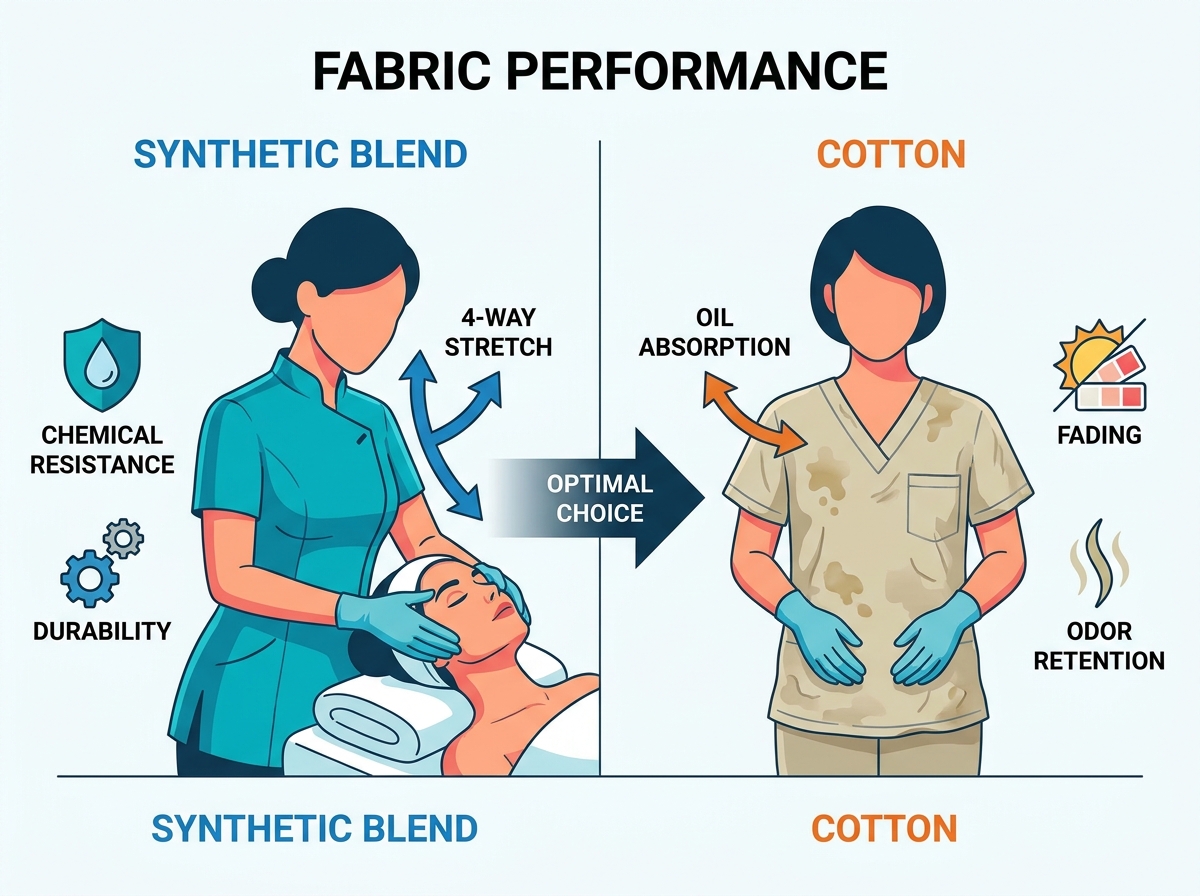
Fabric dictates lifespan: Prioritize synthetic blends with 4-way stretch over pure cotton for resistance to massage oils, wax, and chemical exfoliants.
Form follows function: Evaluate fits based on practitioner movement (reaching, bending) rather than static aesthetics.
Layering is strategic: Esthetician uniform jackets provide necessary temperature control in climate-varied spa environments without compromising hygiene.
Vendor scalability matters: Select suppliers based on size inclusivity, continuity of style lines, and reliable minimum order quantities (MOQ).
Brand continuity forms the foundation of any luxury service experience. Clients pay premium prices for advanced treatments. They expect visual perfection from the moment they enter your facility. However, the clinical reality involves messy extractions and aggressive chemical peels. Basic apparel fails completely to bridge this aesthetic gap. You need purpose-built esthetician uniforms. These specialized garments align high-end aesthetics seamlessly alongside strict clinical hygiene standards. They communicate pristine professionalism instantly.
Practitioner fatigue represents another major operational challenge. Estheticians endure exceptionally long service days. Poorly fitted garments actively restrict mobility. They increase physical strain across the shoulders and lower back heavily. Consequently, employee satisfaction drops sharply over time. Uncomfortable staff simply cannot deliver exceptional client service. Retention becomes increasingly difficult when daily physical fatigue goes unaddressed.
Upgrading your treatment apparel directly boosts team morale. Comfortable employees perform better during intensive physical tasks. They maintain better posture throughout long facials. Purpose-built apparel acts as supportive equipment. It serves a functional role far beyond simple aesthetics.
Best Practice: Ask your team for honest feedback regarding their current garments. Track specific complaints regarding shoulder tightness or fabric breathability.
Common Mistake: Purchasing off-the-rack nursing scrubs to save time. Nursing scrubs serve hospital environments, not luxury spa workflows.
Chemical and fluid resistance remains critical for any treatment apparel. We must carefully assess material vulnerability daily. Spas use heavy massage oils constantly. These oils cause rapid lipid degradation in weak fabrics. Hard and soft wax adheres stubbornly to standard textiles. Furthermore, benzoyl peroxide causes irreversible bleaching on unprotected fabrics. Your material choices dictate garment survival directly.
Evaluating exact fabric blends prevents costly purchasing mistakes. We can categorize the most common options easily.
Polyester and Rayon Blends: These synthetic options offer remarkably high durability. They resist wrinkles beautifully throughout a busy shift. Color retention remains excellent even after repeated aggressive washing.
Spandex and Elastane Integration: You absolutely require 4-way stretch capabilities. Stretch fabrics support vital biomechanics directly. Practitioners reach across wide treatment beds constantly. They perform repetitive massage movements daily. Stiff fabrics hinder these necessary actions entirely.
The Cotton Problem: High-cotton blends absorb heavy oils rapidly. They retain stubborn odors permanently. Additionally, pure cotton fades quickly during aggressive clinical washing cycles. Pure cotton ultimately fails in demanding spa environments.
Treatment rooms feature uniquely high humidity levels. Steamers and hot towel cabis generate intense ambient moisture. Practitioners experience severe discomfort without proper moisture-wicking fabrics. Breathable materials mitigate this specific issue effectively. They keep your staff cool under heavy operational pressure. Sweat-wicking technology draws moisture away from the skin quickly.
Table: Material Blend Comparison for Spa Environments
Fabric Type | Stretch Capacity | Chemical Resistance | Breathability |
|---|---|---|---|
Pure Cotton | Low | Poor (Absorbs oils) | High initially, poor when damp |
Polyester/Rayon | Moderate | High (Resists bleaching) | Moderate |
Poly/Spandex Blend | Excellent (4-way) | High (Repels fluids) | Excellent (Moisture-wicking) |
Standard medical profiles often look entirely too clinical. You should distinguish them clearly from elevated spa uniforms for estheticians. Elevated designs feature refined asymmetrical necklines. They incorporate highly flattering peplum cuts. Hidden pockets provide essential functionality quietly. These subtle design elements transform basic workwear into premium professional attire seamlessly.
You must implement the "service test" framework before bulk ordering. Static fitting provides zero insight regarding actual workplace performance. Ask your team to perform these specific test movements:
The Reaching Protocol: Practitioners extend arms fully forward. Check for any binding across the upper back.
The Bending Assessment: Staff lean over a standard treatment bed. Watch for inappropriate midriff exposure during deep stretches.
The Seated Evaluation: Providers sit on a rolling stool. Ensure the tunic length covers the hips comfortably.
The Tool Retrieval: Staff reach into pockets repeatedly. Assess whether pocket placement interferes during delicate facials.
Your team must move freely. Restrictive garments ruin the client experience entirely.
Strategic layering offers a strict functional necessity. Staff transition between cool front-of-house areas and warm treatment rooms frequently. Zip-up or snap-front designs provide quick temperature control perfectly. Furthermore, esthetician uniform jackets demand specific infection control considerations. Check jackets for fitted cuffs always. Fitted cuffs prevent accidental cross-contamination during active services. Loose sleeves drag across clients inappropriately. They also sweep through contaminated products on your tray.
We must establish transparent assumptions regarding garment longevity. Heavy clinical use degrades fabrics steadily. You should expect a six to twelve month lifespan generally. Professional degradation occurs naturally over time. Planning proper replacement cycles prevents sudden uniform failures.
Oil breakdown requires strict washing requirements. You must utilize specialized enzymatic detergents strictly. High hot water requirements often conflict against delicate fabric care instructions. Aggressive washing inevitably impacts overall fabric integrity eventually. Balance strict hygiene alongside material preservation carefully. Instruct your team regarding proper pretreatment methods clearly.
Choosing the right color involves strategic operational thinking.
Black or Dark Uniforms: Dark colors hide minor stains perfectly. However, they remain highly susceptible to bleach spotting. Lint accumulation also plagues dark fabrics visibly. You must keep lint rollers stocked constantly.
White or Light Uniforms: Light apparel conveys ultimate clinical cleanliness beautifully. Unfortunately, preventing yellowing requires highly aggressive laundering. Oil shadowing becomes distinctly visible on white garments over time.
Many clinics choose mid-tone grays or deep blues. These shades balance stain masking alongside lint camouflage effectively.
Selecting the right vendor impacts your operations profoundly. Size inclusivity represents a non-negotiable requirement. Vendors must offer true-to-size ranges reliably. You need options spanning from XXS to plus sizes seamlessly. This standardizes your entire team's appearance perfectly. Inclusive sizing prevents alienating any valued staff members. Everyone deserves perfectly fitted professional apparel.
Beware of trendy fast fashion uniform suppliers. They frequently discontinue popular colors abruptly. They alter specific cuts without any prior warning. This practice forces premature full-team repurchasing unexpectedly. Prioritize established vendors guaranteeing long-term style continuity. Stable supply chains protect your initial investment completely.
Evaluate custom embroidery costs upfront carefully. Check for strict logo placement restrictions before ordering anything. Verify expected delivery lead times thoroughly.
Take one specific actionable step today. Always order a sizing run first. Buy one single garment representing each available size. Choose your desired core color. Distribute these sizes among your staff for testing. Do this before committing to any massive bulk contract. This simple step eliminates costly sizing errors entirely.
Esthetician apparel represents highly specialized equipment. It is far more than just basic workwear. You must carefully balance fabric technology, inclusive fit, and rigorous care protocols. Proper selection enhances clinical authority while supporting long-term practitioner health directly. Your investment shapes the daily operational reality of your business.
Take immediate action using these next steps:
Audit your current team uniforms immediately.
Identify specific wear patterns like stubborn oil stains or ripped seams.
Determine necessary fabric upgrades for your upcoming procurement cycle.
Order a sizing run to verify supplier reliability before committing.
A: Focus heavily on enzymatic pre-treatments. Apply the enzyme cleaner directly onto the stain immediately. Let it sit before washing. Never use high-heat drying until stains clear completely. Heat permanently sets oil residue into synthetic fibers.
A: Yes, they generally qualify as tax deductions. The garments must be mandatory for your job. They also cannot be suitable for everyday streetwear. However, local tax codes apply differently everywhere. Consult your accountant for specific regional compliance rules.
A: We recommend three to five complete sets. This depends heavily on your laundry access. It also depends on your weekly shift frequency. Rotating multiple sets prevents premature fabric exhaustion. Adequate rotation extends the lifespan of each individual garment.
A: Visual cohesion matters greatly for branding. However, functional necessities differ wildly between roles. You can bridge this gap easily. Use identical colors but different garment styles. Providing uniform jackets to front-desk staff unifies the team aesthetically.


