


Views: 0 Author: Site Editor Publish Time: 2026-06-22 Origin: Site


Children's haircuts present unique operational challenges in any busy salon. Squirming, sensory sensitivities, and brief attention spans make the styling chair a highly unpredictable environment. Many stylists try clamping an adult cape around a child's neck to save time. This flawed workaround fails miserably in practice. It creates gaping holes, traps overwhelming heat, and heavily restricts natural movement. You inevitably end up managing itchy clients and highly stressed parents.
You need better tools to handle these daily scenarios. Investing in a purpose-built Kids Haircut Cape goes far beyond simple aesthetics. It stands as a vital, functional business decision. The right specialized equipment speeds up your service times dramatically. It directly cuts down on customer complaints and builds lasting trust with parent-customers. In this guide, we explore the essential features of quality pediatric salon apparel. You will learn how to evaluate neck closures, material breathability, sizing, and functional visual design to elevate your family services.
Closure Types Matter Most: Standard 12–23 inch adult snap ranges leave gaps on children; quality kids capes require micro-adjustable Velcro or tight-set snaps to prevent hair splinters.
Breathability Overrules Weight: A "lightweight" cape isn't automatically "breathable." Quality fabrics must allow vapor release to prevent children from overheating under the cape.
Waterproofing Needs Context: Repellent coatings (like Polyurethane) are necessary for spray bottles, but must be balanced with sensory-friendly, soft-drape fabrics.
Strategic Distraction: Visually engaging patterns act as functional tools to ease anxiety and minimize movement during the service.
Parents notice the small details of their child's salon experience. They return to salons where their child feels comfortable and safe. If a child leaves your chair with an itchy neck, parents will look elsewhere next time. Specialized equipment solves this retention problem directly.
Operational efficiency improves dramatically when you use correctly sized gear. A properly fitted cape reduces the agonizing time spent sweeping hair off small clothes. You spend less time managing wet collars after a shampoo. You also spend less energy calming an irritable, uncomfortable child. This efficiency allows you to turn chairs faster while keeping quality high.
Furthermore, specialized gear establishes a strong professional identity. It demonstrates clearly to clients how much your salon values family needs. Using makeshift solutions looks amateurish to paying clients. Equipping your station with professional-grade pediatric apparel proves your commitment to excellent service.
Keep specialized capes highly visible at your station to signal family-friendliness.
Explain to parents why you use pediatric capes, highlighting the comfort benefits.
Always ask the child if the cape feels comfortable before beginning the service.
Children's neck circumferences fall well below the standard adult baseline. The closure system acts as your primary defense against itchy, cut hair. Standard adult snap ranges simply cannot accommodate a toddler's neck safely.
Velcro, or hook-and-loop fasteners, provides infinite micro-adjustability. This ensures a perfectly flush fit on toddlers and older children alike. Fast application helps immensely when dealing with impatient kids. However, Velcro carries distinct risks. It is prone to trapping stray hairs if not cleaned rigorously. The material degrades over time with heavy washing. Additionally, stiffer edges can scratch sensitive skin if you misalign the strips during application.
Snap closures offer a completely different set of advantages. They are highly durable, highly sanitary, and impervious to hair entanglement. Snaps offer a premium feel and easily withstand aggressive daily washing. Their main drawback is a lack of micro-adjustment. To solve this, a high-quality pediatric cape must feature a specialized, densely packed snap sequence. This sequence must easily accommodate necks much smaller than 12 inches.
Closure Type | Primary Advantage | Main Drawback | Best Use Case |
|---|---|---|---|
Micro-Velcro | Infinite adjustability for flush fit | Traps hair, requires meticulous cleaning | High-volume salons prioritizing speed |
Close-Set Snaps | Sanitary, durable, hair-resistant | Lacks micro-adjustability between snaps | Premium salons prioritizing longevity |
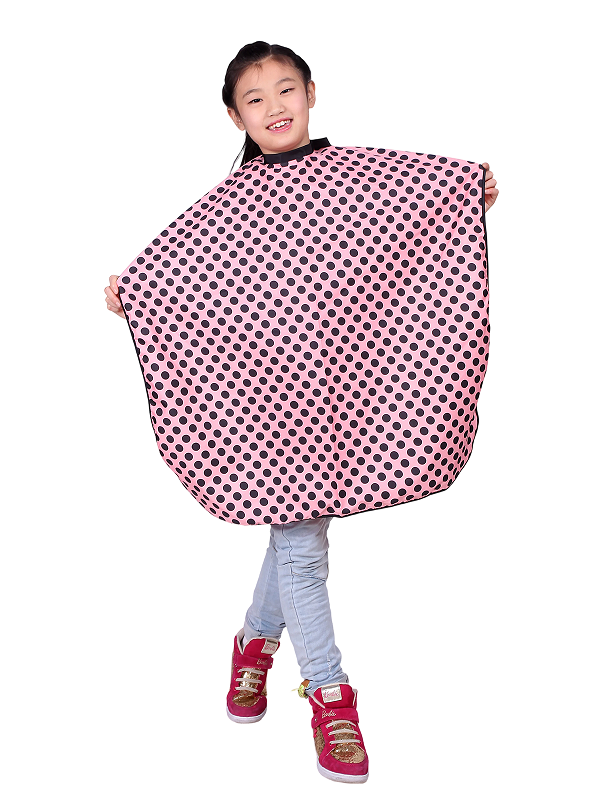
Understanding industry terminology prevents costly purchasing mistakes. Many stylists confuse "lightweight" with "breathable." A lightweight cape refers only to its physical mass. Breathability defines the fabric's ability to release water vapor and sweat. Kids run notoriously hot during haircuts. This makes true breathability a non-negotiable feature for pediatric capes.
Water resistance levels vary significantly across materials. For standard haircuts, a water-repellent Nylon or Polyester blend works perfectly. In these fabrics, water beads up and rolls off safely. Premium capes achieve this using flexible Polyurethane (PU) or Acrylic resin coatings. You must avoid stiff PVC plastics entirely. PVC rustles loudly near the ears. This sudden noise can easily trigger sensory overload in anxious toddlers.
Sensory considerations extend to the fabric's overall drape. The material must feel soft against bare skin. Stiff, paper-thin, or overly heavy materials cause immediate discomfort. This discomfort rapidly promotes squirming and crying. Selecting a sensory-friendly Kids Haircut Cape ensures a calmer client and a smoother haircut.
Assuming thin plastic is breathable because it feels light.
Ignoring the auditory impact of crinkly fabrics near a child's ears.
Choosing heavy chemical capes for simple dry haircuts.
Using an adult cape on a small child creates immediate structural problems. The excess fabric aggressively bunches in their lap. This bunching traps body heat, creating an uncomfortable "swamp" effect under the material. Furthermore, adult capes feature a front-long, back-short design. When you wash a child's hair, this vulnerability exposes their back to cold water.
Ideal dimensions for pediatric apparel provide 360-degree coverage without overwhelming the styling chair. The footprint must protect the client completely while allowing the stylist freedom to move. Tailored dimensions prevent the cape from dragging on the floor or tangling in the chair base.
Mobility remains crucial for younger clients. The cape should be long enough to cover the shoes of a seated child. This prevents tiny hairs from embedding permanently in their clothing. However, it must remain tailored enough to allow them to keep their arms free underneath. Many children feel panicked when completely pinned down by heavy fabric.
Seat the child normally in the styling chair.
Fasten the neck securely, checking for any skin gaps.
Ensure the front fabric covers the lap without massive pooling.
Check the back drop to guarantee full coverage over the chair edge.
Many traditional salons default to solid black or burgundy capes. These solid colors certainly hide stains well. However, custom patterns serve a powerful dual purpose in a pediatric salon environment. Visual design is not just decorative; it functions as a highly effective behavioral management tool.
The psychology of distraction plays a massive role in successful pediatric services. Playful, age-appropriate patterns give the child something specific to focus on. Animals, outer space themes, or geometric shapes act as instant icebreakers. Discussing the pattern reduces chair anxiety and keeps the child's head reasonably still.
Visual design also drives brand cohesion. For specialized pediatric salons, carefully curated patterns reinforce your visual identity. You can achieve this branded look without sacrificing the garment's technical performance. High-quality dye-sublimation printing keeps the fabric soft while delivering vibrant, engaging imagery.
A reliable kids salon cape must withstand harsh, frequent laundering between clients. Strict sanitation standards require you to wash these garments constantly. Understanding proper care protocols ensures your investment lasts longer while maintaining its protective qualities.
Improper care protocols introduce massive risks to the fabric. High-temperature machine drying poses the biggest threat. Extreme heat easily cracks PU waterproof coatings. It also warps Velcro strips, rendering them useless. Chemical breakdown represents another major risk factor. You must avoid using harsh chlorine bleaches on coated nylon. Bleach rapidly strips away the vital water-repellent properties.
Setting realistic lifecycle expectations helps manage salon operations smoothly. You should implement routine edge-fray checks during folding. Conduct regular snap-stress tests to ensure the closures remain secure. A high-quality Kids Haircut Cape maintains its professional appearance over hundreds of uses when cared for correctly.
Wash on a gentle cycle using cool or warm water.
Air dry or tumble dry on the lowest possible heat setting.
Fasten Velcro strips together before washing to prevent lint buildup.
Inspect neck closures weekly for signs of premature wear.
When evaluating new pediatric apparel, your shortlisting logic must remain strictly functional. Prioritize a tight-sealing neck closure, choosing between micro-Velcro or close-set snaps. Always demand soft, breathable, water-repellent fabric over cheap novelty factors.
We strongly recommend avoiding compromises on core functionality just to hit a lower price point. A cheap, stiff cape ultimately costs you much more. You pay the price through lost client retention, negative reviews, and daily operational friction. Quality gear pays for itself rapidly through smoother, faster service.
Your next step is clear. Audit your current cape inventory immediately. Assess the sizing gaps you currently experience with your youngest clients. Upgrade your stations to specialized pediatric apparel, and watch how it elevates your entire family service experience.
A: While common, clamping creates thick fabric folds. These folds trap loose hair and funnel it directly down the child's neck. This completely defeats the cape's primary purpose and guarantees an itchy, unhappy client.
A: Look for ultra-soft microfiber or high-grade polyester blends. They should feature quiet, flexible water-repellent coatings. Avoid stiff plastic or crinkly nylon entirely, as these generate loud rustling noises near the ears.
A: Expect to replace them every 6 to 12 months in a high-volume salon. Replacement indicators include cracked waterproof coatings, failed snaps, or Velcro strips that no longer securely grip together.


