


Views: 0 Author: Site Editor Publish Time: 2026-08-01 Origin: Site


A cheap shampoo cape is a liability disguised as a saving. One ruined designer shirt from a leaky collar costs more than outfitting an entire salon with premium capes. A soaked back leads to bad reviews and lost clientele.
At the wash bowl, salons face a serious dual threat daily. High water volume flows constantly. Harsh chemical runoff mixes directly into this stream. You rinse out bleach, deposit potent colors, and neutralize heavy keratin treatments. Your client sits directly in the splash zone.
Choosing the right material requires looking past generic "waterproof" labels. You must evaluate fabrics based on specific technical merits. Professionals look for high hydrostatic resistance to block water pressure completely. They check for chemical durability against acidic and alkaline runoff. They also assess client thermal comfort to prevent excessive sweating. We will break down exactly how to evaluate these materials below.
Polyurethane (PU) coated fabrics offer the best balance of absolute water resistance and client comfort.
Nylon and standard Polyester are ideal for cutting but require frequent replacement or re-treating if used at the shampoo bowl, as their water-repellent coatings degrade.
Vinyl (PVC) provides total chemical and water blocking but sacrifices breathability, making it better for quick chemical washes than long treatments.
A cape’s material is only as effective as its neck closure; pairing a high-end waterproof fabric with a degrading Velcro collar will still result in client leaks.
Salon owners often underestimate the financial risk associated with budget wash gear. You contrast the upfront cost of premium materials, typically ranging between $20 and $35, against cheaper alternatives. Budget capes seem attractive initially. However, hidden costs quickly consume those initial savings.
Consider the liability of ruined client clothing. A single drop of high-lift bleach seeping through a low-quality neck seam permanently damages garments. You must then reimburse the client, apologize profusely, and risk a permanent negative review. Furthermore, you will find yourself replacing cracked budget vinyl capes every three months. Premium materials endure hundreds of wash cycles without structural failure.
Many stylists also confuse generic salon capes with dedicated wash gear. We must clarify the functional difference immediately. Cutting capes prioritize slickness. Their primary job is shedding hair rapidly. They feature tight synthetic weaves to prevent hair splinters. Conversely, dedicated wash capes must prioritize hydrostatic head ratings. This rating measures exactly how much water pressure a fabric blocks before leaking. Wash bowls demand high hydrostatic resistance and robust chemical defense.
Finally, we must consider the "clean, safe, and stylish" mandate. Your material choice directly impacts salon hygiene. Cheap plastics often trap moisture in their seams. This trapped moisture breeds mold and mildew, causing foul odors. Premium materials offer superior mold resistance. They also wipe down easily between clients. A pristine, stylish cape elevates your brand perception instantly.
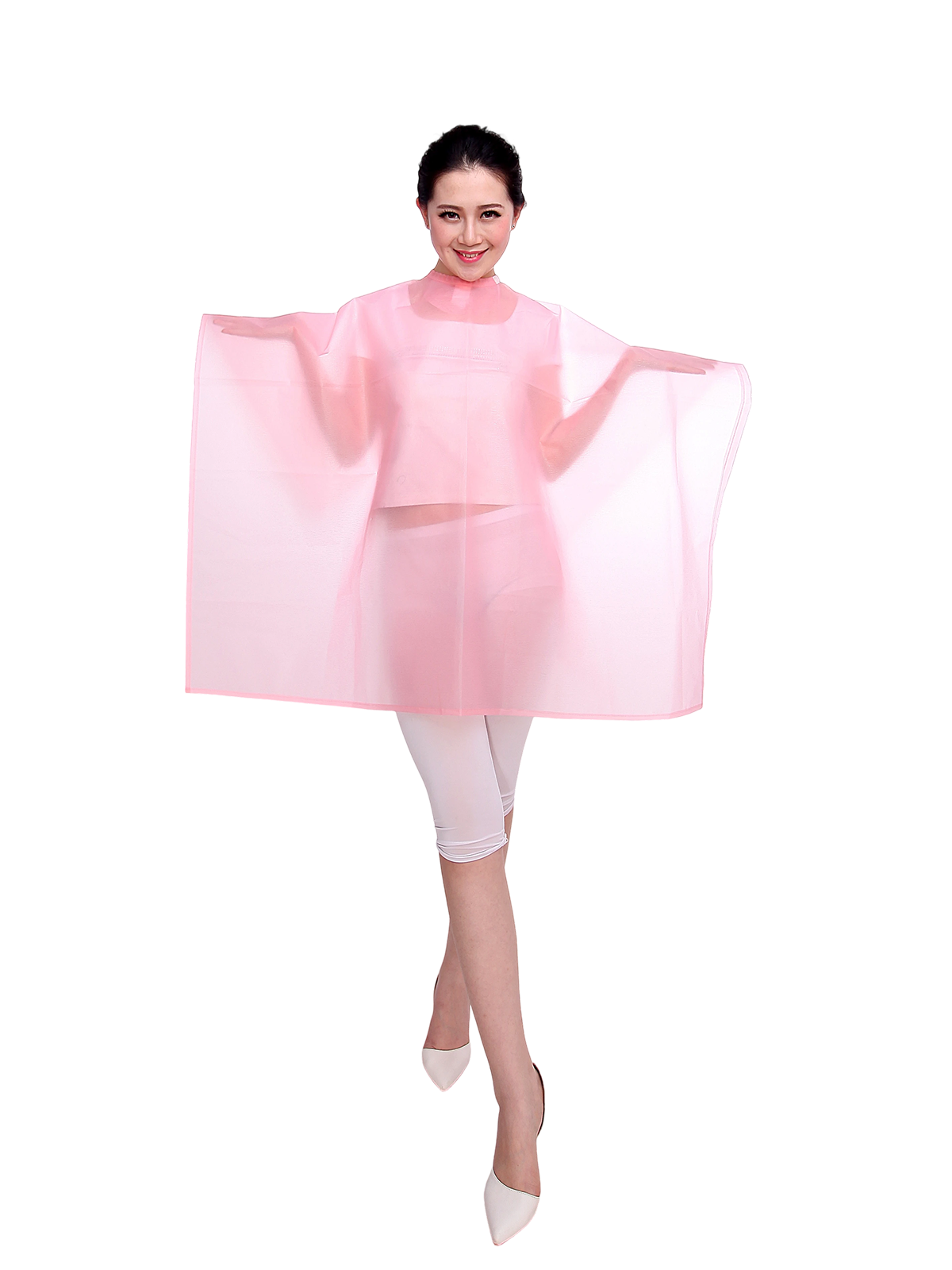
Understanding fabric technology helps you protect clients properly. We evaluate the most common materials used in professional salons below. Finding reliable Shampoo Capes requires knowing how these underlying fabrics behave under stress.
Mechanism: Manufacturers take a lightweight, breathable fabric base and apply a microscopic layer of polyurethane. This coating bonds directly to the fibers.
Verdict: PU remains the industry standard for high-end salons. It provides completely waterproof protection. It strongly resists color staining and bleach damage. Most importantly, PU does not trap body heat like heavier plastics do. Clients remain comfortable during long processing times. It drapes beautifully over the chair without feeling stiff.
Mechanism: These are fabrics chemically treated to repel liquids and stains at a molecular level. The Teflon alters the surface tension of the fabric.
Verdict: Teflon treatments offer excellent performance for repelling water and bleach initially. They provide a lightweight, premium aesthetic. You often see them in gunmetal or metallic finishes. However, they carry a distinct flaw. The molecular coating diminishes after heavy industrial laundering. You will notice water absorbing rather than beading up after several months of intense use.
Mechanism: Vinyl consists of a solid synthetic plastic polymer. It contains no woven fabric base, functioning as a continuous solid sheet.
Verdict: PVC serves as the heavy-duty option. It acts as an absolute barrier. It works best for intense chemical processing and heavy color washes. The trade-off is zero breathability. Clients will sweat profusely during longer processing times. This creates the dreaded "greenhouse effect" underneath the cape. Additionally, PVC proves highly prone to cracking if dried on high heat settings.
Mechanism: Manufacturers use tightly woven synthetic threads treated with a Durable Water Repellent (DWR) chemical finish.
Verdict: These fabrics feel highly comfortable and drape naturally. They work beautifully for haircuts. However, they pose a major risk for heavy wash bowl use. Once the DWR coating wears off, water seeps directly through the woven weave. They suit traditional barbershops well. Barbers typically execute very brief wash intervals. High-volume color salons should avoid them for washing.
You cannot rely on marketing descriptions alone. You need a structured approach to evaluate protective gear. We break down the critical performance criteria below.
Material Type | Water Protection | Chemical Defense | Breathability | Durability Profile |
|---|---|---|---|---|
PU Coated | Absolute (Impermeable) | High | Moderate | Excellent if air-dried |
Vinyl (PVC) | Absolute (Impermeable) | Very High | Zero | Prone to heat cracking |
Teflon Treated | High (Repellent) | Moderate | High | Coating degrades over time |
Standard Nylon | Low (Resistant only) | Low | Very High | Weave saturates quickly |
We must define the technical difference clearly. Water-resistant materials rely on tight weaves. They deflect minor splashes effectively. However, they eventually saturate under sustained pressure. When a client leans back into the bowl, their neck applies pressure against wet fabric. Water-resistant fabrics fail here. Waterproof materials, like PU and Vinyl, create an impermeable physical barrier. Water cannot pass through them regardless of pressure.
Salons deal with the harsh reality of washing out lighteners and toners. You must assess how different materials handle acidic or alkaline exposure. Bleach actively degrades untreated polyester fibers. Over time, the material weakens and tears. Vinyl and PU block these chemicals from penetrating. They wipe clean without discoloring. Always prioritize fabrics explicitly rated for chemical resistance if you process color frequently.
Never ignore client comfort. Cheap plastics create a severe "greenhouse effect." Body heat reflects off the plastic barrier and becomes trapped. Imagine a client undergoing a 20-minute deep conditioning treatment under a heavy PVC sheet. They will become flushed, sweaty, and miserable. Material thickness and breathability directly impact the salon experience. PU coatings allow moisture vapor to escape while blocking liquid water.
A cape's material is only as effective as its closure system. The fabric must hold up around the neck. You generally choose between snaps and Velcro.
Snap Closures: Rust-proof brass or durable plastic snaps provide reliable seals. They do not degrade. They offer firm size adjustments.
Velcro Closures: Velcro degrades rapidly in salon environments. It traps stray hair constantly. Pulling Velcro apart daily compromises the surrounding material's structural integrity over time.
Common mistakes include pairing a premium waterproof fabric with cheap Velcro collars. The collar will fail, leading to leaks long before the fabric wears out.
Every salon operates differently. You should tailor your equipment to your specific service menu. Integrating high-quality Shampoo Capes requires aligning the material traits with your daily workflow.
High-Volume Color & Processing Salons: You require pure impermeable barriers. You rinse heavy color deposits, aggressive lighteners, and toxic smoothing treatments all day. Liquid cannot penetrate your gear.
Shortlist: Heavy-duty Polyurethane or Vinyl. You will often see these marketed specifically as "Chemical Capes."
Traditional Barbershops: Barbers focus on fast washes and stray hair deflection. Clients spend minimal time at the bowl. You need lightweight gear designed for rapid turnover.
Shortlist: Teflon-treated Polyester or lightweight Nylon. They shed hair perfectly and handle brief water exposure well.
Luxury/Spa Salons: High-end spas focus heavily on aesthetic drape, silence, and maximum comfort. Loud, crinkling plastic noises disrupt relaxing scalp massages. You need quiet, breathable fabrics.
Shortlist: Premium PU-coated synthetics or specialized lightweight Teflon weaves. These feel luxurious against the skin while offering adequate protection.
Purchasing great equipment is only half the battle. You must maintain it correctly. Poor laundering habits destroy premium fabrics rapidly.
We must examine how different materials survive salon laundering. High heat acts as the ultimate enemy of waterproof gear. Polyurethane and Vinyl will melt, warp, or crack under high-heat drying. The structural integrity of the plastic barrier fails completely. You must require air drying or strict tumble-low settings for these items. Staff training on laundry protocols is absolutely critical. Do not mix them with heavily soiled towels requiring high heat.
You must acknowledge standard implementation realities. Treated fabrics, such as DWR Nylon or Teflon Polyester, have a finite lifespan. The chemical coating slowly washes away. Eventually, the waterproof barrier fails entirely. You cannot prevent this degradation. You can only plan for it. Expect to replace treated fabric capes more frequently than solid PU or Vinyl barriers.
Salons require strict sanitation between deep washes. You likely use Barbicide or similar quaternary ammonium disinfectants daily. You spray down stations and capes constantly. Heavy plastics and PU handle these daily spray-downs effortlessly. They do not absorb the disinfectant. Treated fabrics, however, might absorb the spray if their coating is weak. Always wipe down polyurethane gently with a soft cloth to avoid scratching the waterproof membrane.
Choosing the correct protective gear safeguards your clients and your business reputation. For the vast majority of full-service salons, Polyurethane (PU) coated shampoo capes provide the highest return on investment. They balance absolute waterproofing with long-term durability. They resist chemical damage while keeping clients thermally comfortable during long processing sessions. While Vinyl serves heavy chemical processing well, and Teflon suits quick barbershop washes, PU remains the versatile industry standard.
Your next step requires immediate action. Audit your current wash station inventory today. Perform a simple water pooling test. Pour a small amount of water onto the fabric of your oldest cape. If the water absorbs into the material rather than forming tight beads, the barrier has failed. It is time to upgrade your wash station inventory before a client's garment gets ruined.
A: No. Regular cutting capes prioritize shedding hair over blocking water. They typically use breathable, water-resistant fabrics. Under the sustained pressure of a wash bowl, water will easily seep through the weave and soak your client.
A: A chemical cape uses heavy, impermeable materials like PVC to block harsh acids, bleach, and color from damaging clothes. A shampoo cape focuses heavily on water protection and comfort, often using lighter Polyurethane to ensure breathability while remaining waterproof.
A: A high-quality polyurethane cape should last between 12 and 18 months under heavy daily use. Lifespan depends entirely on proper laundering. Washing with bleach or drying on high heat will reduce this lifespan to just a few months.
A: Yes. Snaps provide a secure, fixed barrier that does not degrade over time. Velcro traps hair, loses its grip after repeated washing, and eventually creates gaps where water and chemicals can easily leak down a client's neck.
A: Wash them in cold or warm water using mild detergent. Never use bleach or harsh fabric softeners. Always hang them to air dry, or use the lowest possible heat setting on your dryer. High heat will melt or crack the waterproof coating.


