


Views: 0 Author: Site Editor Publish Time: 2026-06-18 Origin: Site


A squirming, uncomfortable child makes a haircut profoundly stressful for everyone involved. The stylist struggles to cut evenly while dodging sudden movements. The parent watches anxiously from the sidelines. Meanwhile, the child simply wants to escape the chair. Many people quickly blame the buzzing clippers or the unfamiliar salon environment. Yet, the real culprit often drapes right over their shoulders.
We must view salon apparel differently. It is not merely a protective plastic sheet. It functions as a vital behavioral tool. Sensory comfort directly dictates child cooperation during a trim. If the fabric feels scratchy, heavy, or intensely hot, a child will instinctively fight it.
This article provides a professional evaluation framework. You will learn how to select capes that perfectly balance child-friendly softness with commercial-grade durability and hygiene. We will explore fabric types, safety certifications, essential closure designs, and proper maintenance routines to elevate the haircutting experience.
Soft, breathable fabrics reduce the "sauna effect" and sensory overload, minimizing child movement during haircuts.
Poly-blends and crinkle nylon offer the best balance of softness, breathability, and non-stick hair properties.
Heavy-duty vinyl or polyurethane (PU), while highly chemical-resistant, often fail for children due to heat retention and stiffness.
Neck closure design (plastic snaps vs. scratchy Velcro) and safety certifications (Azo-free) are critical secondary factors when evaluating soft capes.
Proper maintenance—specifically avoiding high-heat drying—extends the life of water-repellent soft fabrics.
Children experience the world differently than adults. Their sensory processing systems are highly sensitive. When we ignore this fact, we invite chaos into the salon chair.
Rough textures or heavy materials easily trigger sensory defense mechanisms in children. Imagine wearing a thick, inflexible plastic poncho in a warm room. You would feel trapped and sweaty. Children react to this exact discomfort by squirming. They wiggle to escape the restrictive feeling. This sudden movement severely compromises safety. Sharp scissors and restless toddlers create a dangerous combination. A soft, lightweight drape prevents this physical agitation. It allows the skin to breathe. When a child feels physically at ease, their nervous system calms down.
We can use fabric as a psychological tool. Introducing a soft, non-threatening cape reduces haircut anxiety significantly. Stiff, crinkly plastics sound loud and intimidating near a child's ears. Instead, frame a soft fabric drape as a "Super Shield" or a "Magic Cloak." This playful framing works best when the material actually feels gentle. Soft textures provide tactile comfort. They act much like a security blanket. This simple sensory swap shifts the child's mindset from fear to cooperation.
Sensory comfort delivers measurable returns. For salon owners, a comfortable child means faster chair turnover. Stylists finish cuts efficiently without constant interruptions. Parents notice this smooth process. They leave glowing reviews and rebook reliably. For home DIYers, comfort means less mess and much less stress. Investing in a high-quality Kids Haircut Cape pays for itself quickly through smoother routines and happier clients.
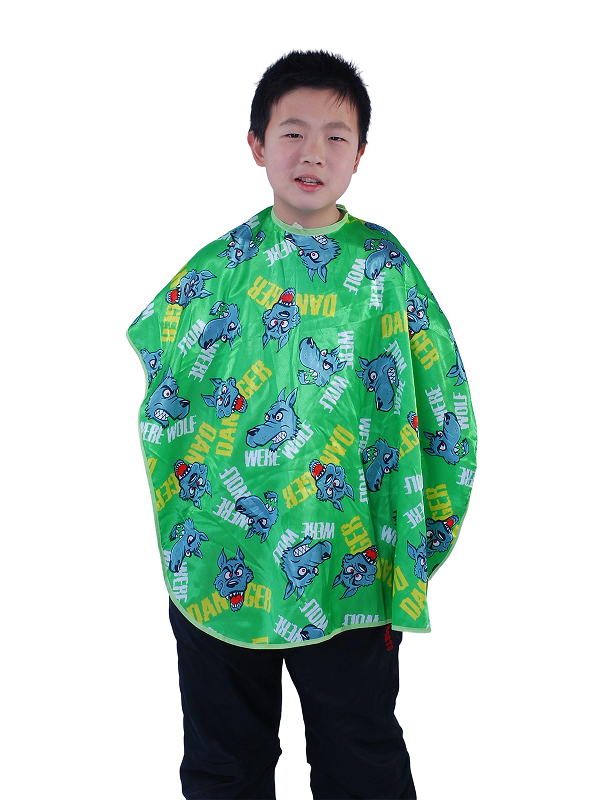
Not all fabrics belong in a salon environment. We must evaluate materials based on breathability, weight, and water resistance. Here is how the most common materials stack up for pediatric use.
Polyester and pongee blends dominate the premium market for good reasons. They offer a silky texture that feels delightful against the skin. They are highly breathable and fast-drying. More importantly, they feature excellent "non-stick hair" properties. Loose clippings slide right off the surface.
However, they do have a minor drawback. They require a much tighter weave density to match the heavy waterproofing of pure synthetics. Manufacturers must apply invisible water-repellent coatings to keep them dry. Overall, they remain the top choice for everyday cuts.
Nylon taffeta shines when you need an ultra-lightweight option. It provides superior water resistance. It drapes beautifully over a small body without adding bulk.
The main issue arises with temperature regulation. Nylon can feel clammy against bare skin if the child starts sweating. To solve this, premium nylon capes require a soft inner lining or a specialized collar. This prevents the fabric from sticking uncomfortably to a warm neck.
Adult salons rely heavily on PU and heavy vinyl. These materials offer maximum chemical and water protection. They easily repel strong hair dyes and bleach.
Despite these benefits, you must avoid them for children. They are highly inflexible and distinctly heavy. They trap body heat aggressively. We call this the "sauna effect." It quickly causes sweating, itching, and severe restlessness in young clients. Since children rarely receive intense chemical color treatments, this extreme protection is entirely unnecessary.
Use this simple reference chart to evaluate your options quickly:
Fabric Type | Softness Level | Breathability | Best Application |
|---|---|---|---|
Poly/Pongee Blends | High (Silky) | Excellent | Standard haircuts, sensory-sensitive kids |
Nylon Taffeta | Medium | Good | Wet cuts, quick trims |
PU / Heavy Vinyl | Low (Stiff) | Poor (Traps heat) | Adult chemical treatments (Avoid for kids) |
Softness alone does not guarantee safety. Children have thinner, more permeable skin than adults. We must rigorously screen salon apparel for hidden hazards. Use the following checklist to weed out inferior products.
Chemical-Free Dyes: Always look for "Azo-free" or OEKO-TEX-certified fabrics. Many cheap textiles use toxic azo dyes to achieve bright colors. These chemicals easily irritate a child's sensitive skin. Softness should never come at the cost of chemical exposure. Demand verified safety certifications.
The "Cute but Useless" Trap: Avoid buying pure cotton capes. They often feature highly attractive children's prints. Parents love how they look. Unfortunately, cotton acts like a sponge. It absorbs water instantly. It aggressively traps prickly hair clippings in its fibers. Pure cotton lacks functional water-repellent (DWR) coatings. It will leave the child damp and miserable.
Low-Quality Stitching: Soft, lightweight fabrics require robust construction. Look for double-stitched, reinforced seams. Commercial laundering stresses fabrics heavily. Single-stitched seams will fray quickly. The cape will fall apart after just a few wash cycles. Insist on heavy-duty thread work.
The neck area dictates the entire comfort experience. A perfectly soft cape fails instantly if the collar scratches the client. You must evaluate closures and collars with extreme care.
The industry generally relies on two closure methods. They perform very differently in pediatric settings.
Velcro: Many people choose Velcro because it is highly adjustable. However, it degrades quickly in a busy salon. It magnetically traps loose hair, thread, and lint. More importantly, the stiff, plastic edges of the Velcro strip often scratch small, sensitive necks. This causes immediate complaints and squirming.
Snaps: Snaps represent the most secure and reliable option. You should specifically recommend plastic snaps over metal ones. Metal snaps carry distinct risks. They cause a surprising "cold-shock" when they touch warm skin. Furthermore, metal snaps can trigger contact dermatitis in children with nickel or metal allergies. Plastic snaps eliminate both issues entirely.
Modern manufacturing has revolutionized collar comfort. We now see the emergence of elastic shirred necklines. These gather the fabric softly, allowing it to stretch and hug the skin securely.
Another excellent innovation is the soft silicone neck ring. These conform gently to surprisingly small necks. They create a watertight seal. They perfectly prevent itchy hair clippings from slipping down the back. Crucially, they achieve this barrier without causing a choking or restrictive sensation.
Purchasing a premium Kids Haircut Cape is only the first step. You must maintain it correctly. Poor washing habits destroy soft synthetic blends rapidly.
Heat is the absolute enemy of water-repellent fabrics. Manufacturers treat soft poly-blends with an invisible protective coating. Over-drying these fabrics in a hot commercial dryer will crack or melt this essential barrier. Once the coating cracks, the cape will absorb water immediately. You must mandate air-drying whenever possible. If you must use a machine, select a strict low-heat tumble dry setting.
Even highly breathable fabrics can occasionally trap sweat or natural body oils. You might notice a faint, sour smell over time. Do not resort to harsh chemicals. Instead, rely on a simple white vinegar pre-soak. Submerge the cape in a mixture of water and white vinegar for 30 minutes before washing. The vinegar safely strips away organic odors. It neutralizes smells without degrading the delicate synthetic fibers.
Never use standard chlorine bleach on your pediatric salon wear. Chlorine acts aggressively against soft nylon and polyester fibers. It breaks down the structural integrity of the fabric, making it brittle. It also strips away any waterproofing. If you need to disinfect the material thoroughly, specify color-safe or specialized enzymatic cleaners. These maintain hygiene while protecting the fabric's lifespan.
Choosing the right pediatric salon apparel requires a strategic approach. We must move beyond simply picking the cutest pattern. You should systematically prioritize high-density poly-blends. They provide the perfect mix of breathable softness and functional water resistance. Always insist on reliable plastic snap closures to protect sensitive skin. Furthermore, verify safety through Azo-free or OEKO-TEX certifications.
Investing in a premium, genuinely soft cape changes the entire dynamic of the appointment. It eliminates sensory triggers and physical discomfort. This thoughtful choice effectively shifts the haircut experience from an exhausting sensory battle to a comfortable, highly manageable routine for everyone involved.
A: Yes. Premium soft fabrics utilize high-density weaves treated with durable water-repellent (DWR) coatings. This specialized treatment allows water droplets to bead up and roll off instantly. The smooth surface tension also prevents hair clippings from sticking, all while keeping the material remarkably soft and flexible.
A: The culprit usually lies in the closure hardware. A scratchy Velcro strip, a freezing cold metal snap, or loose hair trapped in a poorly fitted collar will irritate the skin. To solve this, look for capes featuring soft elastic or silicone-lined necklines combined with gentle plastic snaps.
A: For optimal commercial hygiene and product longevity, salons should maintain two to three dedicated pediatric capes per chair. This rotation allows sufficient time for proper washing and crucial air-drying between young clients, ensuring the water-repellent coatings remain fully intact.


