


Views: 0 Author: Site Editor Publish Time: 2026-10-08 Origin: Site


Every day, hair colorists face a highly specific operational hazard. One errant splash of bleach or developer can permanently ruin your favorite outfit. Dealing with vivid fashion color stains introduces even more risk to your personal wardrobe. Selecting the right gear goes far beyond simple aesthetics. It acts as an essential physical barrier. This critical choice directly influences both your professional image and your physical comfort during long, demanding shifts. We will explore how to build a reliable evaluation framework for your protective wear. You will learn to properly balance robust chemical resistance with vital ergonomic support. We will also examine the subtle factors impacting long-term durability. By the end of this guide, you will know exactly how to upgrade your salon uniform for maximum protection, efficiency, and lasting performance.
Material dictates performance: Bleach resistance and vivid color resistance require different fabric treatments (e.g., Polyurethane vs. waxed canvas).
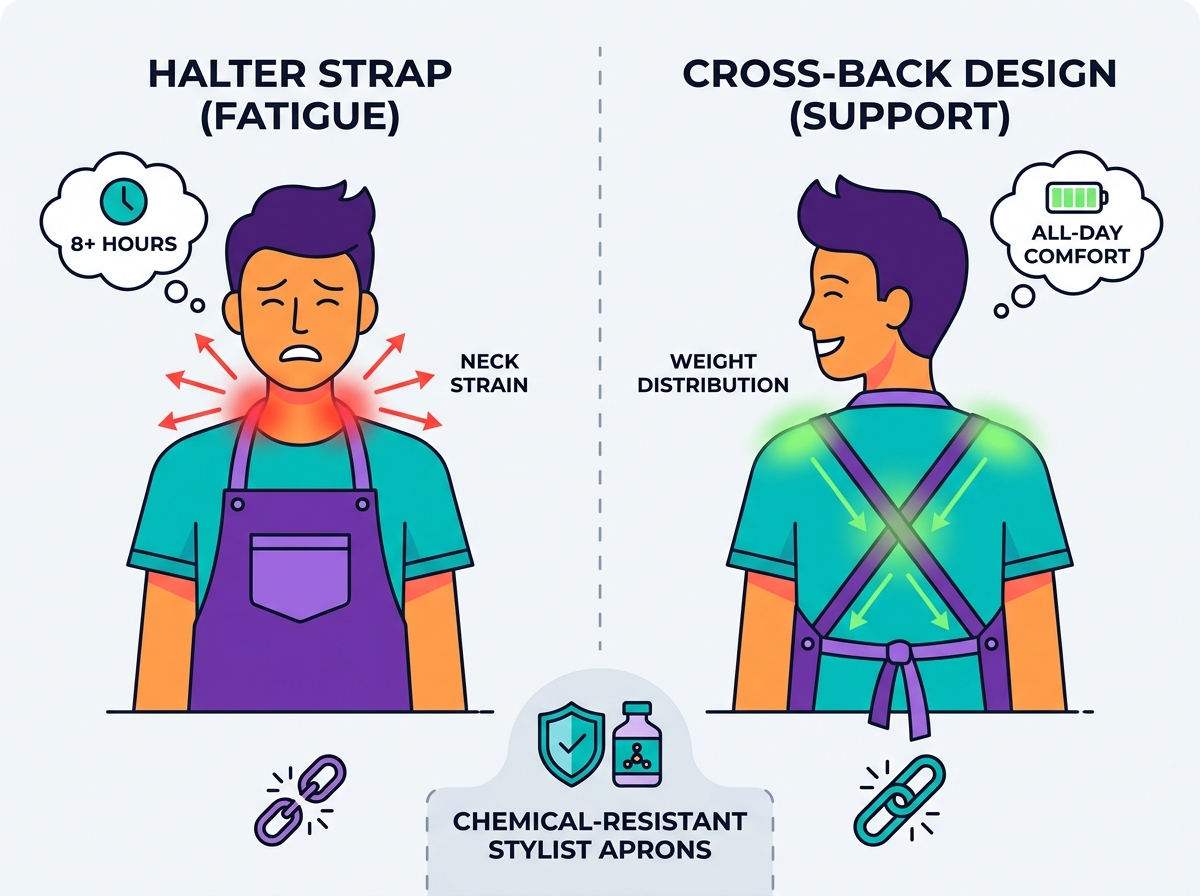
Ergonomics are non-negotiable: Cross-back strap designs significantly reduce neck fatigue during 8+ hour color correction sessions compared to standard halter styles.
Design details matter: Hair-resistant pockets, rust-proof hardware, and secure shear storage differentiate professional-grade aprons from generic kitchen or craft aprons.
True cost of ownership involves evaluating an apron’s lifespan against daily chemical exposure and required washing frequencies.
Many salon professionals heavily underestimate the financial drain of ruined clothing. Think about your monthly wardrobe budget. A single rogue drop of 40-volume developer destroys a premium shirt instantly. You cannot fix bleach spots. Replacing professional attire constantly adds up to hundreds of dollars annually. We call this the clothing replacement metric. Investing in high-quality gear stops this cycle immediately. You protect your personal wardrobe investments. You keep more money in your pocket over time.
Professional optics matter enormously during high-ticket salon services. Clients routinely pay premium prices for complex color corrections and balayage techniques. They expect a flawless, pristine experience from start to finish. Wearing a stained, degrading apron significantly damages client perception. A clean, sharp uniform signals competence and intense care. You want your protective gear to look as professional as the haircuts you deliver. We know first impressions set the tone for the entire appointment. Clients notice details. They trust stylists who look put-together and prepared.
Furthermore, poorly constructed aprons create severe secondary physical risks. Carrying heavy clips, metal shears, and dense combs puts continuous stress on your body. Standard neck straps pull directly on your cervical spine. This causes severe neck and shoulder strain over time. We must address this hidden physical fatigue when selecting daily salon workwear. You cannot perform at your best when your neck throbs after three hours. The physical toll directly impacts your focus and your creative energy behind the chair.
The foundation of any reliable protective garment lies entirely in its core fabric. Polyurethane (PU) and TPU blends currently stand as the absolute industry standard. They offer complete waterproof and chemical-proof capabilities. They repel heavy bleach mixtures effectively. You can wipe away thick developer spills without the fabric absorbing the liquid. These advanced synthetic materials provide exceptional protection for colorists handling harsh oxidation chemicals daily. We strongly recommend choosing chemical-resistant stylist aprons made from these specific blends for ultimate peace of mind.
Treated canvas and denim offer a distinctly different value proposition. Stylists love them for their superior breathability and rugged stylistic appeal. However, they present a notable trade-off. They deliver much lower absolute chemical resistance. Waxing or surface chemical treatments on heavy canvas break down eventually. Constant heavy laundering accelerates this protective degradation. Once the wax fades, liquids soak straight through to your clothes. You must re-wax them frequently to maintain their protective barrier.
Vinyl and PVC provide intense liquid protection but completely lack breathability. They trap body heat aggressively during busy, fast-paced shifts. You will likely sweat profusely under thick vinyl. Furthermore, salon heat tools and daily chemical exposure degrade rigid vinyl quickly. It often hardens and cracks over time. This structural failure makes it much less desirable for long-term daily wear.
Clarifying a very common misconception is vital here. An apron repelling bleach might still stain heavily from direct dyes. Vivid fashion colors behave quite differently than standard lighteners. They aggressively stain porous materials on contact. You must evaluate materials based on their non-porous wipeability. If a bright pink dye hits your garment, you need a surface that wipes totally clean instantly.
Material Performance Comparison
Material Type | Bleach Resistance | Vivid Color Resistance | Breathability |
|---|---|---|---|
PU / TPU Blends | High (Excellent barrier) | High (If wiped quickly) | Moderate |
Treated Canvas | Low to Moderate | Low (Absorbs quickly) | High |
Vinyl / PVC | High (Total block) | Moderate (Prone to staining) | Low |
Utility separates generic kitchen workwear from true professional-grade salon gear. Strategic pocket architecture completely changes how you work behind the chair. You need bottom-release zippers or specialized flap closures. These specific designs prevent trapped hair and dried lightener buildup inside your pockets. Nobody wants to dig their hands into itchy, sharp hair clippings. You also need heavy reinforced stitching. It safely holds sharp shears and metal combs without puncturing the fabric. Finding proper stylist aprons for hair colorists means verifying these exact pocket details.
Hardware and fastenings require careful visual inspection. Zippers, grommets, and clasps face daily, intense exposure to water. Splashing hydrogen peroxide rapidly corrodes cheap, standard metals. You should look exclusively for rust-proof brass or high-grade stainless steel. Heavy-duty polymer hardware also performs beautifully under chemical stress. Rusty hardware ruins the garment's appearance and can snag delicate clothing.
Coverage and length directly impact your daily safety and hygiene. We must define the ideal drop length. Your apron should cover your thighs comfortably. This protects your clothing during seated color applications. It also guards against messy splashing during bowl-side rinsing. An apron ending at the waist leaves your lap completely vulnerable to bleach drops.
Inspect pocket seams for double-stitching to prevent shear punctures.
Test bottom zippers to ensure smooth hair removal.
Verify all metal clasps repel magnetic pull, indicating rust-proof stainless steel or brass.
Measure the drop length against your usual seating position at the washbowl.
Salon shifts demand extreme physical stamina and endurance. Proper ergonomics remain crucial for your career longevity. Cross-back straps provide a massive biomechanical advantage over traditional halter styles. They distribute the garment weight evenly across your shoulders and upper back. They pull tension away from your vulnerable neck. Halter straps pull directly on your cervical spine all day. This causes debilitating neck pain and chronic tension headaches by late afternoon.
Adjustability dictates your functional range of motion. A rigid strap system limits your mobility during complex services. You need straps accommodating various clothing layers effortlessly. Sometimes you wear a thick winter sweater. Other days you wear a thin summer t-shirt. The apron must adjust to varying body types smoothly. It should never restrict your arm elevation. You need full overhead mobility during intricate foil applications. Stiff armholes slow down your working speed.
Finally, analyze the overall garment weight. You must balance heavy-duty protective material against the physical toll it takes. Wearing a massive, rigid garment drains your energy quickly. Lightweight PU blends offer an excellent compromise. They shield you effectively without dragging your shoulders down. Lighter materials keep you nimble and energetic throughout exhausting ten-hour shifts.
Proper daily care dramatically extends the life of your protective gear. You must establish strict cleaning protocols immediately. Chemical-resistant coatings require very gentle handling. You should avoid high-heat machine drying completely. High commercial heat melts delicate PU coatings instantly. It also strips protective wax from treated canvas. Air drying remains the only safe method for preserving structural integrity.
Between-client maintenance ensures continuous, flawless professionalism. Spot-cleaning should feel completely effortless. You want an apron you can wipe down in seconds. Use a damp microfiber cloth or mild dish soap. This saves precious turnaround time. You can handle back-to-back color clients without changing your uniform once. When exploring bulk options for an entire salon team, investigating custom salon chemical-proof aprons guarantees you acquire materials optimized for quick sanitation.
Set realistic lifespan expectations for your gear. Daily chemical exposure degrades absolutely any material eventually. A premium coated apron should last 12 to 18 months under heavy salon use. Watch closely for signs of wear. Once the protective barrier begins cracking or peeling, moisture will seep through. Replace the garment immediately when this occurs. Do not wait for a major bleach accident to prompt an upgrade.
Tossing coated aprons into high-heat commercial salon dryers.
Scrubbing vivid dye stains with abrasive brushes, damaging the waterproof seal.
Using aggressive bleach-based detergents on PU blends instead of mild soap.
Folding stiff vinyl aprons tightly, causing permanent creases and eventual cracking.
Selecting the ideal protective garment totally transforms your daily work experience. You must prioritize material based on the specific chemicals you handle most frequently. Heavy bleach requires completely different resistance than vivid direct dyes. Always ensure your chosen gear features a supportive, ergonomic cross-back strap design. Verify the inclusion of smart utility features like hair-resistant pockets and rust-proof hardware before purchasing.
We strongly encourage every stylist to audit their current workwear expenses. Evaluate your daily physical comfort levels honestly. Upgrading your uniform protects your expensive personal clothing from ruin. It preserves your physical health by reducing chronic neck strain. Most importantly, it elevates your professional presentation to every single client sitting in your chair. Take control of your daily uniform today and invest in proper protection.
A: Yes, direct dyes can permanently stain highly porous materials. They can even leave faint shadows on lighter-colored PU if you do not wipe them off immediately. Always clean vivid color spills the moment they happen using a damp cloth. Quick action prevents the tiny pigment molecules from setting.
A: No. Water resistance often relies on a temporary DWR (Durable Water Repellent) coating. True chemical resistance requires non-porous materials like PU or TPU. These robust materials physically block oxidation, protecting the underlying fabric from bleach damage. Do not confuse simple water resistance with industrial chemical protection.
A: Look for specialized salon gear featuring concealed pockets. Bottom-release zippers offer the best solution, allowing hair to fall right through. Angled pocket designs and secure flap closures also prevent stray hairs and lightener dust from accumulating inside. Avoid standard open-top patch pockets entirely.
A: You should minimize machine washing whenever possible. Frequent machine cycles degrade chemical-resistant coatings quickly. Favor daily wipe-downs with mild soap and water instead. When machine washing becomes absolutely necessary, use a cold, gentle cycle and always hang the garment to dry safely.


