


Views: 0 Author: Site Editor Publish Time: 2026-10-12 Origin: Site


Salon environments demand highly durable protective gear. Every day, these garments endure harsh exposure to bleach, oxidative developers, and stubborn colorants. Ironically, aggressive cleaning methods often destroy their protective coatings. Effective stylist apron care carefully balances stringent state board hygiene compliance against essential material preservation. If you ignore this balance, protective barriers degrade rapidly. Compromised gear exposes staff to chemical seepage and increases your operational overhead. Maximizing the lifespan of the garment requires precision and a scientific approach to textile maintenance.
This guide introduces a structured, evidence-based strategy to tackle salon chemicals and biological matter. You will discover how to eliminate stains without compromising waterproofing or chemical-resistant barriers. We will outline optimal machine settings, daily wipe-down protocols, and common mistakes to avoid. By following these methods, you ensure a consistently safe and professional workspace.
Heat is the enemy: High-temperature washing and machine drying warp and melt protective polyurethane and Teflon coatings.
Chemistry matters: Harsh detergents, bleach, and fabric softeners break down the hydrophobic layers that protect stylists from chemical burns.
Immediate action prevents permanent damage: Spot-treating color spills within 10 minutes is more effective than aggressive laundering at the end of the week.
Standardized SOPs save money: Implementing a strict salon-wide washing protocol reduces gear replacement costs and ensures consistent professional presentation.
Protective salon apparel represents a significant ongoing investment. Replacing premium aprons every three months destroys your supply budget. Poor maintenance protocols usually cause this rapid degradation. When you implement proper care routines, you can easily extend garment life to twelve months or more. This extension yields a massive return on investment. Imagine multiplying these savings across a ten-chair salon. You keep overhead low while maintaining high aesthetic standards.
Common Mistake: Throwing heavily soiled aprons into a generic weekly laundry pile.
Best Practice: Assign specific maintenance responsibilities to individual stylists to encourage ownership.
Workplace safety relies heavily on intact protective barriers. Degraded aprons fail to protect staff from harsh chemical seepage. A spill involving 40-volume developer can easily penetrate compromised fabrics. This exposure leads to severe skin irritation and potential chemical burns. Salon owners hold liability for providing safe working environments. Failing to maintain safety gear exposes your business to regulatory fines and worker compensation claims. You must treat apron integrity as a non-negotiable safety requirement.
Clients evaluate your professionalism the moment they sit in the chair. They stare at your workstation and attire for hours. Peeling, stained, or functionally compromised aprons instantly erode client trust. They signal a lack of attention to detail. Premium salon services demand pristine presentation. When staff wear degraded gear, it lowers the perceived value of your expensive color services. Crisp, clean workwear communicates expertise and justifies premium pricing.
Modern salon aprons rely on specialized synthetic layers. Manufacturers engineer these textiles to repel fluids and resist chemical degradation. Understanding these specific materials helps you adjust your cleaning methods accordingly.
Table 1: Salon Apron Material Characteristics
Material Type | Primary Benefit | Vulnerability |
|---|---|---|
Polyurethane (PU) Blends | Highly flexible and waterproof | Cracks easily under high heat |
Teflon-Treated Canvas | Excellent stain repellency | Friction and abrasion weaken it |
Vinyl (PVC) | Total chemical block | Stiffens and peels over time |
Waxed Cotton | Breathable and water-resistant | Alkaline soaps strip the wax |
Protective finishes degrade through mechanical stress and chemical reactions. Alkaline detergents actively strip wax and Teflon treatments. High washing temperatures cause synthetic polymers to crack and peel away from the base fabric. Aggressive spin cycles create mechanical friction. This friction creates microscopic tears in the protective membrane. Once chemicals breach this barrier, the garment loses its functional purpose entirely.
You must evaluate care requirements before investing in new inventory. Look closely at commercial wash-safe ratings. A multi-chair salon needs scalable maintenance solutions. You cannot expect staff to hand-wash forty garments every single day. Choose materials designed to withstand delicate machine cycles. Prioritize aprons featuring reinforced seams and heat-stable coatings. This proactive evaluation prevents future logistical headaches.
Cut hair acts like tiny needles against fabric. You must remove loose hair before water touches the garment. Use a sticky lint roller or a stiff clothing brush. If you skip this step, hair splinters embed deeply into the woven fibers during the wash cycle. Furthermore, washing loose hair heavily damages washing machine drainage pumps. Knowing exactly how to wash salon aprons requires meticulous dry preparation.
Immediate isolation prevents permanent color damage. Hair color and lightener spills require fast intervention. Do not let oxidative dyes set into the protective matrix. You have a ten-minute window for maximum effectiveness.
Apply a few drops of mild dish soap directly to the spill.
Gently massage the area using a soft microfiber cloth.
Rinse the isolated spot under cool running water.
For biological matter, apply specialized enzymatic cleaners cautiously.
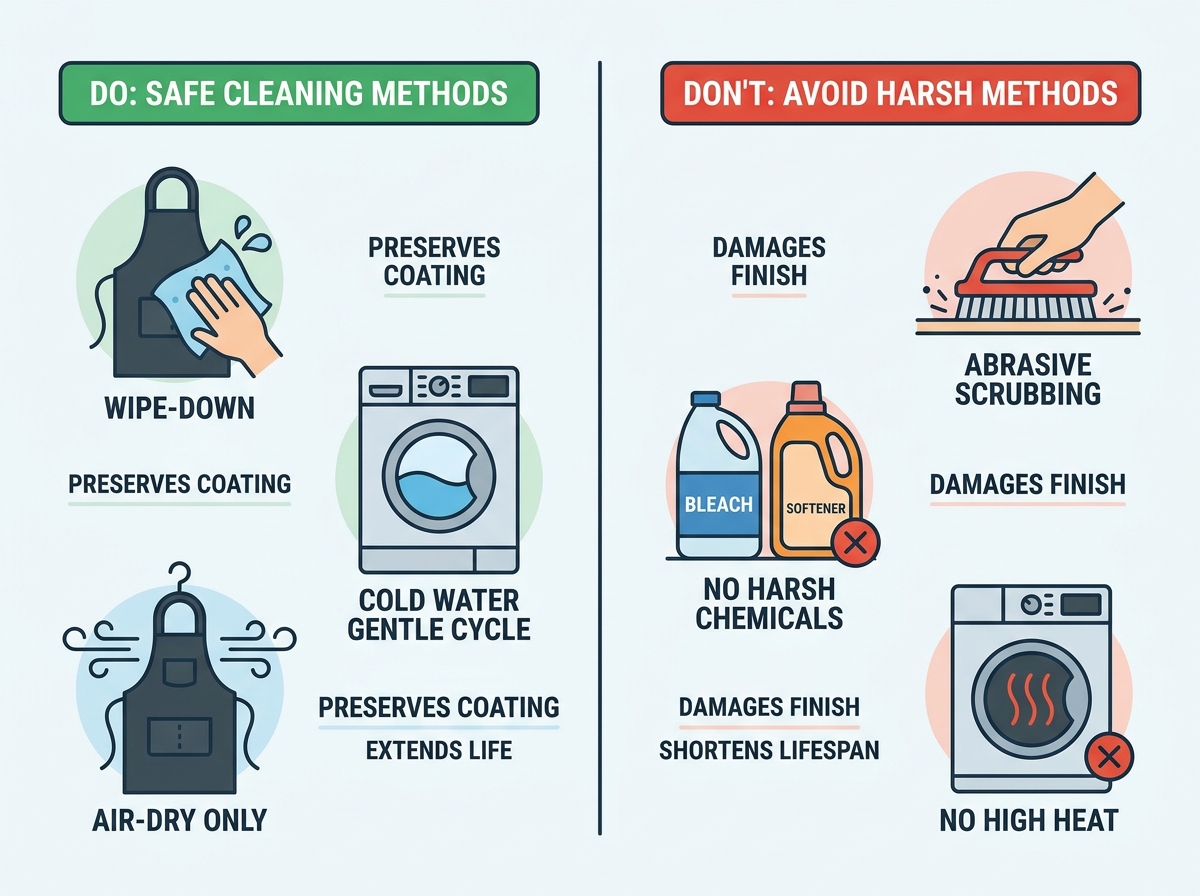
Standard laundry settings easily destroy professional salon apparel. You must program your machines specifically for synthetic protective coatings. Proper load management prevents destructive mechanical friction.
Select a delicate cycle: Minimize agitation to protect the outer membrane.
Use cold water exclusively: Keep temperatures strictly below 30°C (86°F) to prevent polymer melting.
Wash aprons separately: Never mix them with abrasive cotton towels or garments containing open metal zippers.
Use liquid detergent: Powdered detergents often fail to dissolve in cold water and act as an abrasive.
Drying methods dictate the final lifespan of your protective gear. You must mandate air-drying across your entire salon. Hang aprons completely flat on broad hangers in a well-ventilated area. Explicitly rule out tumble drying under any circumstances. Even low-heat dryer settings warp polyurethane and crack vinyl layers. Air-drying ensures the chemical barrier remains smooth and entirely intact.
Laundering garments daily accelerates their eventual breakdown. Instead, implement a strict between-client wipe-down protocol. Keep a damp microfiber cloth stationed at every mirror. Quickly wipe away developer splatters and color drips before they cure. This micro-habit removes product buildup efficiently. Excellent care for chemical-resistant aprons relies heavily on these minor daily interventions rather than aggressive weekend scrubbing.
How you store your gear matters immensely. Advise your staff to hang aprons on broad, rounded hooks. Never fold protective garments and stuff them into small station drawers. Folding creates sharp, permanent creases. These creases act as stress points where protective coatings weaken and eventually snap. Hanging them flat maintains structural integrity and keeps them looking highly professional for the next client.
Salons naturally trap strong chemical odors. Protective fabrics often absorb these smells over time. Do not spray harsh commercial perfumes onto the exterior shell. These alcohol-based sprays degrade water-repellent layers. Instead, recommend mild, targeted deodorizing methods. Mix a heavily diluted white vinegar solution in a fine mist bottle. Lightly spray this mixture exclusively onto the interior fabric lining. It neutralizes odors without compromising the exterior shield.
Fabric softeners destroy technical workwear. They coat fabrics in a thick, lipid-based residue. This waxy residue actively counteracts water-repellent finishes. It clogs the pores of breathable fabrics and traps lingering odors permanently. Hydrophobic layers lose their surface tension completely. Water and chemicals will simply soak through instead of beading up and rolling off.
Chlorine bleach represents a severe hazard to synthetic materials. It rapidly weakens structural seams and nylon threading. Bleach eats directly through protective polyurethane coatings. It also causes severe premature yellowing on clear or translucent vinyl materials. If you need to sanitize a garment, rely on cold-water enzymatic sanitizers instead. Keep pure bleach far away from your protective apparel.
Never attack a stubborn stain using aggressive mechanical force. Warn your staff against using stiff-bristled brushes or kitchen scouring pads. These harsh tools create thousands of micro-tears across coated fabrics. You might remove the stain, but you also remove the waterproofing. Chemicals can subsequently penetrate these invisible rips, leading to dangerous skin exposure during future services.
Proper care for chemical-resistant aprons remains a non-negotiable part of daily salon inventory management.
Treating protective workwear with technical care yields direct and measurable business benefits.
You will achieve significantly lower overhead costs by extending the lifespan of premium garments.
Implementing these protocols ensures sustained aesthetic quality and enhanced staff protection.
Action Step: Print these specific guidelines as a backroom SOP. Use this framework to evaluate washability when purchasing your next batch of professional gear.
A: No. You must distinguish between hard-surface disinfection and delicate fabric care. Soaking aprons in Barbicide degrades synthetic textiles rapidly. The harsh chemicals break down waterproof coatings and weaken structural seams. Instead, use an EPA-registered laundry sanitizer formulated specifically for cold water cycles.
A: Once oxidative dye sets into a porous coating, complete removal is highly unlikely. Aggressive scrubbing will only damage the protective finish further. You cannot reverse this chemical bond without destroying the garment. Focus entirely on immediate between-client wipe-downs as your only true preventative measure.
A: Flaking typically results from direct user error during the laundering process. Washing the garment in hot water melts the synthetic polymers. Tumble drying warps the layers. Using highly alkaline powder detergents strips away the protective matrix. Always wash in cold water and air-dry flat.
A: Limit full machine laundering to one or two times per week. Frequent washing breaks down the protective membrane prematurely. Rely on daily wipe-downs with a damp microfiber cloth to manage surface soiling. Only use the washing machine when the garment becomes heavily soiled or absorbs strong odors.


