


Views: 0 Author: Site Editor Publish Time: 2026-10-21 Origin: Site


Stepping into a high-end salon sets immediate expectations. Clients anticipate complete relaxation and undisputed luxury from the moment they arrive. Salon client robes act as vital functional barriers. They protect valuable client clothing while defining this critical initial service experience. They represent far more than a simple cover-up garment. Managers face a core business problem every single day. You must balance a premium client feel against harsh operational realities. Chemical services and aggressive color treatments destroy fragile fabrics quickly. Rigorous daily laundering degrades cheap materials over time. We created this guide to provide a robust procurement evaluation framework. You will learn how to select inventory maximizing client comfort and modesty. We also explore proven ways to minimize your replacement cycles. Managers will discover how proper material choices streamline laundry workflows. By the end, you can confidently upgrade your daily operations and protect your profit margins.
Material dictates lifespan: The choice between cotton, microfiber, and specialized chemical-resistant fabrics directly impacts your long-term replacement costs.
Coverage is a retention metric: Properly fitted robes prevent wardrobe malfunctions and client discomfort, protecting client relationships.
True cost is calculated per wash: Upfront wholesale prices matter less than the garment's ability to survive hundreds of commercial laundry cycles without pilling, shrinking, or holding stains.
Operational efficiency: Features like sewn-in belts and quick-dry fabrics reduce daily operational friction for salon staff.
Protecting client clothing means protecting your valuable client relationships. Frame the operational risk clearly in your mind. Color or bleach bleeding through thin capes ruins expensive garments. This mistake causes immediate client frustration. It frequently results in lost loyalty and negative reviews. Quality client robes for hair salons prevent these costly disasters. They serve as a reliable shield during heavy processing sessions.
Consider the powerful psychology of brand perception. We often call this the "first touch" experience. The weight, texture, and visual condition of a garment set the mood immediately. A frayed, stained wrap signals low hygiene standards. It makes clients question your overall professionalism. A crisp, substantial drape elevates the perceived value of the subsequent service. Clients feel pampered and secure before the stylist even begins.
Shift your evaluation criteria away from the cheapest unit price. You must focus on the lowest cost-per-use instead. Factor in the expected replacement frequency. A cheaper garment failing after thirty washes costs significantly more long-term. Premium options surviving hundreds of cycles provide better financial returns. Analyze long-term durability to protect your profit margins effectively.
Client Retention: Premium garments build trust and demonstrate care for client property.
Damage Mitigation: Thick fabrics prevent chemical seepage onto expensive designer clothing.
Operational Budgeting: Durable materials reduce the frequency of mandatory inventory repurchases.
Evaluating salon client robe fabric and fit requires careful consideration. You must balance extreme chemical resistance against a distinct luxury feel. Different salon zones demand very specific material priorities. Understanding these trade-offs prevents costly procurement mistakes.
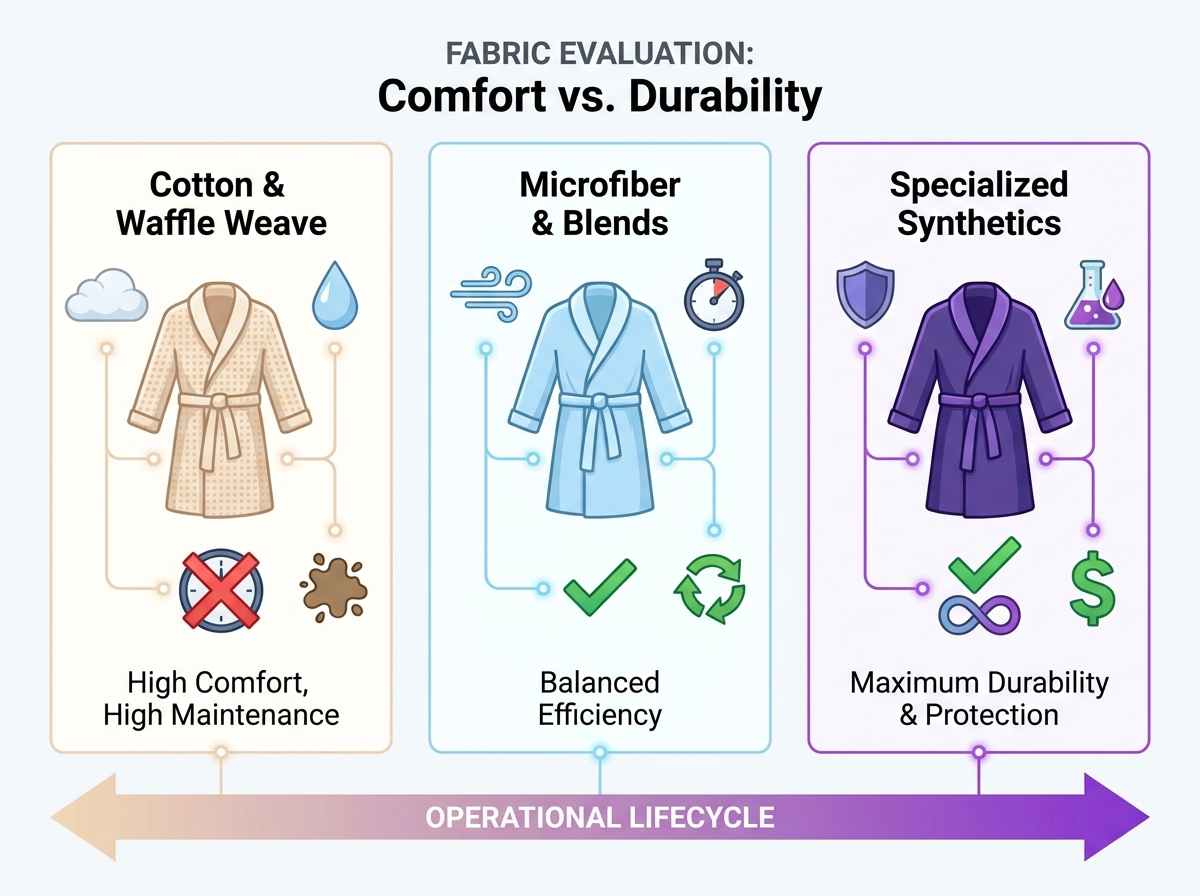
Poly-blends and specialized synthetics offer high resistance to bleach. They repel hair color efficiently. They exhibit lower shrinkage rates and much faster drying times. Stylists prefer them during heavy processing days. They wipe clean easily and resist permanent discoloration.
Microfiber and micro chamois deliver exceptional high-volume durability. They remain incredibly lightweight and naturally wrinkle-resistant. They provide excellent insulation without adding unnecessary bulk. Choose these materials for general styling stations. They also perform beautifully in hybrid spa environments where clients relax between treatments.
Waffle weave and cotton blends offer a classic, comforting aesthetic. They absorb moisture exceptionally well after shampooing. However, they carry a much higher risk of chemical staining. They demand longer dry times in commercial machines. They also present potential shrinkage issues after repeated hot washes.
Fabric weight creates a crucial operational trade-off. You must balance opacity against vital breathability. Heavy fabrics prevent sheer spots and protect modesty. However, heavy fabrics trap heat aggressively. Clients should never overheat while sitting under salon processing dryers. Synthetics offer optimal breathability while maintaining complete visual opacity.
Material Performance Overview
Material Type | Chemical Resistance | Drying Speed | Best Application |
|---|---|---|---|
Specialized Synthetics | High | Very Fast | Color and bleach services |
Microfiber | Medium | Fast | General styling and haircuts |
Cotton Blends | Low | Slow | Dry styling or spa treatments |
Match the fabric to your highest-volume service.
Prioritize dark colors for dedicated coloring stations.
Test fabric breathability under a standard heat lamp before bulk ordering.
We must actively solve the common "gaping" problem. Deep overlaps across the chest are absolutely mandatory. Secure closures provide necessary psychological comfort. Clients frequently move between shampoo bowls and styling stations. Exposed skin creates awkward moments instantly. It diminishes the luxury experience and causes anxiety. A proper overlap ensures clients walk confidently across the floor.
Implement smart, inclusive sizing strategies immediately. Standard "One Size Fits All" garments have serious limitations. They restrict movement for larger clients. They overwhelm petite clients with excess fabric. Build a balanced inventory ratio instead. Stock standard and plus-size garments proportionally. Accommodate all body types without causing awkwardness. Everyone deserves a dignified, comfortable fit.
Focus heavily on functional design elements. Small details drastically improve operational smoothness. Sleeves require careful consideration. Avoid standard short sleeves completely. They leave arms exposed and vulnerable to chills. Full-length sleeves present entirely different problems. Cuffs drag into water at the shampoo bowl. They dip into chemical mixtures at styling stations. Three-quarter length sleeves solve both issues perfectly. They keep clients warm while keeping cuffs clear of hazards.
Evaluate belt designs with operational efficiency in mind. Sewn-in or securely attached belts provide a massive operational advantage. Detached belts frequently disappear inside commercial washing machines. Staff waste hours searching for matching ties. Missing belts render the garment completely useless. Attached belts eliminate this friction entirely.
Assuming OSFA covers clients above a size 14 comfortably.
Providing oversized garments to petite clients, causing tripping hazards.
Ignoring neckline drape, which exposes the chest during reclining.
Set realistic expectations regarding the wash-cycle threshold. Understand how many industrial washes a garment should survive. Garments will eventually degrade, pill, or fray. High-quality synthetics routinely outlast basic cottons in harsh environments. Commercial machines apply intense mechanical stress. Your inventory must withstand daily agitation without losing structural integrity.
Evaluate advanced stain release capabilities thoroughly. Consider how easily the chosen fabric releases stubborn chemicals. Barrier creams, heavy oils, and semi-permanent dyes pose severe threats. They must wash out cleanly during standard hot cycles. Retained stains force premature garment retirement. Darker fabrics hide residual staining, extending the visual lifespan considerably.
Analyze everyday drying efficiency carefully. Fabric choice drastically impacts your overall laundry turnaround time. Heavier cottons naturally trap excessive water. They increase energy bills and extend labor time. Synthetic fibers repel water efficiently. They reduce dryer bottlenecks significantly. You save hours of valuable staff folding time each week. Fast turnover means you need less buffer inventory.
Pre-treatment: Spray color stains immediately before the chemicals set into the fibers.
Temperature Control: Avoid boiling temperatures on synthetics to prevent permanent fiber melting.
Chemical Separation: Never wash heavily soiled color capes with clean styling garments.
Implement a rigorous sample test phase always. Managers should order one or two units initially. Run them through five heavy wash and dry cycles. Test them for shrinkage, pilling, and colorfastness. Perform these tests before committing to a bulk order of salon client robes. Verifying performance prevents expensive, unreturnable wholesale mistakes.
Evaluate customization benefits versus extended lead times. Calculate the actual return on investment of custom embroidery. Logos enhance branding and look professional. Compare this benefit against the ease of reordering blank stock. Embroidery backing must also survive heavy commercial washing. Poor quality embroidery puckers and ruins the garment's drape.
Create a strict care protocol rollout for your team. You must train staff on specific wash protocols immediately. Separate color-service garments from clean styling items diligently. Avoid using fabric softeners on microfiber materials. Softeners coat the fibers and destroy their natural absorbency. Document these procedures clearly near the laundry station to protect your investment.
Measure the garment length before the first wash.
Apply a small dab of developer to a hidden seam.
Wash and dry the garment five consecutive times.
Measure again to calculate the exact shrinkage percentage.
Inspect the collar and cuffs for premature pilling.
The best salon garments sit squarely at the intersection of chemical resilience, client coverage, and laundry efficiency. Procurement decisions shape your daily workflow and impact client perception simultaneously. Balancing luxury aesthetics with industrial durability ensures long-term operational success. Smart choices eliminate hidden replacement costs and reduce staff frustration.
Prioritize synthetic or specialized fabric blends for heavy hair-service salons. They survive harsh chemicals and dry rapidly. Ensure sizing inclusivity to guarantee every client feels secure, respected, and valued. Evaluate your daily laundry workflow honestly. Choose materials reducing friction and bottlenecks. Protect your business margins through smart, calculated, and long-term procurement strategies.
A: The best fabric for hair color services is a bleach-resistant, dark-colored synthetic blend. These specialized polyesters repel liquids and resist harsh chemical staining effectively. They dry quickly and withstand frequent, hot commercial washing without losing their shape or color over time.
A: A standard baseline calculation recommends purchasing 10 to 15 garments per styling chair. This accounts for daily client volume and ensures adequate stock during busy shifts. It also factors in laundry turnaround times and maintains a healthy buffer for unexpected surges or deeply stained units.
A: Yes. Sewn-in belts offer clear operational superiority in busy environments. Attached belts eliminate the frustrating problem of missing parts after commercial laundry cycles. They save your staff significant folding time and prevent clients from struggling to find lost ties.
A: A busy salon should typically replace them every 12 to 18 months, depending on specific wash volumes. Visual signs of necessary retirement include noticeable pilling, frayed seams, permanent color stains, and thinning fabric. Replacing worn inventory promptly maintains your brand’s premium perception.


